
Upgraded Intercooler Development for FL5 Type R and DE5 Type S - OEM Shortfalls and Design Direction
Finally, the time has come to set our sights on a big weak point in the factory air charge system on 2.0T equipped FL5 and DE5 models.
IMHO, the intercooler system is the single biggest weak point on the Type R. These cars run dang hot!
We’re really excited to be getting our hands dirty with this project. We’ve made a name for ourselves developing some of the biggest and baddest intercoolers for other Civics including 10th Gen 1.5T model , the previous FK8 Type R, and the latest 11th Gen 1.5T Civics. Let’s REDEFINE.
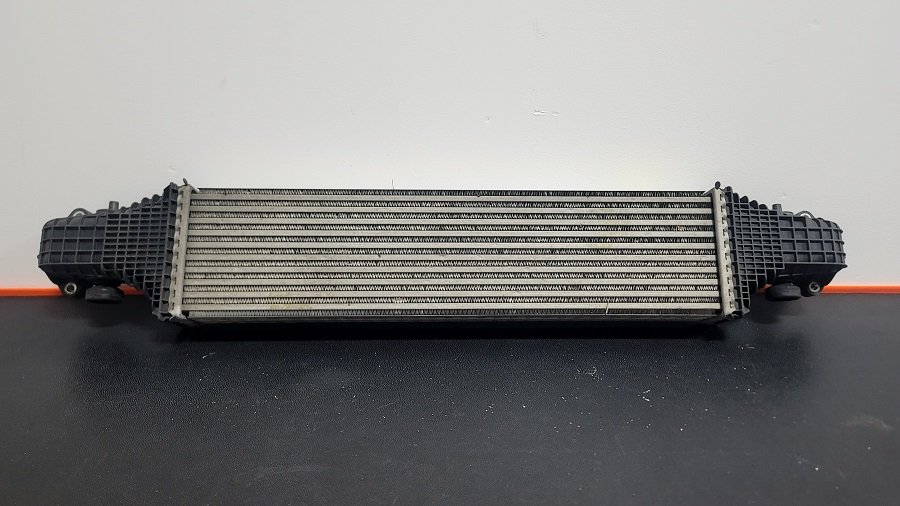
OEM FL5/DE5 Front Mount Intercooler (Uninstalled)
The OEM intercooler found on the latest 2023 and newer Civic Type R and Integra Type S is ok….for stockish power levels. Measuring in at roughly 639mm x 158mm x 64mm it does the job until you ask it for full power after a few pulls on the street or track. And if you have any plans for big power, forget it with the stock unit. We quickly discovered that the OEM FMIC can easily heat soak and kill performance once being pushed. Luckily, Honda left room behind the bumper for the 27WON team to exploit.
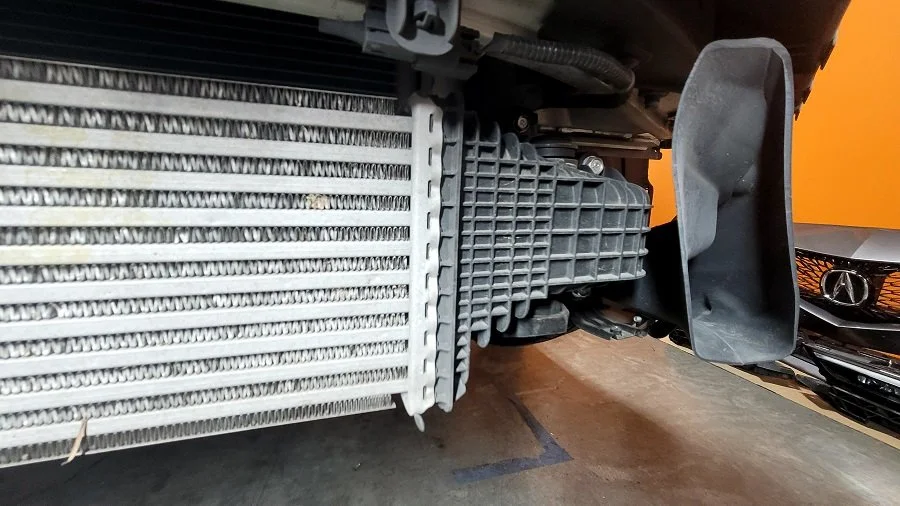
OEM FL5/DE5 Front Mount Intercooler (Installed)
Taking a closer look, nothing crazy to call out on the stock system. The design and manufacturing of the OEM intercooler is very typical of modern vehicles. Both end-tanks are injection molded plastic that are clamped to the aluminum tube-and-fine intercooler core. This construction style is extremely cost effective but not particularly durable. It’s clearly designed to be compact without leaving lots of capacity on the table for more power. Not good for our enthusiast community.
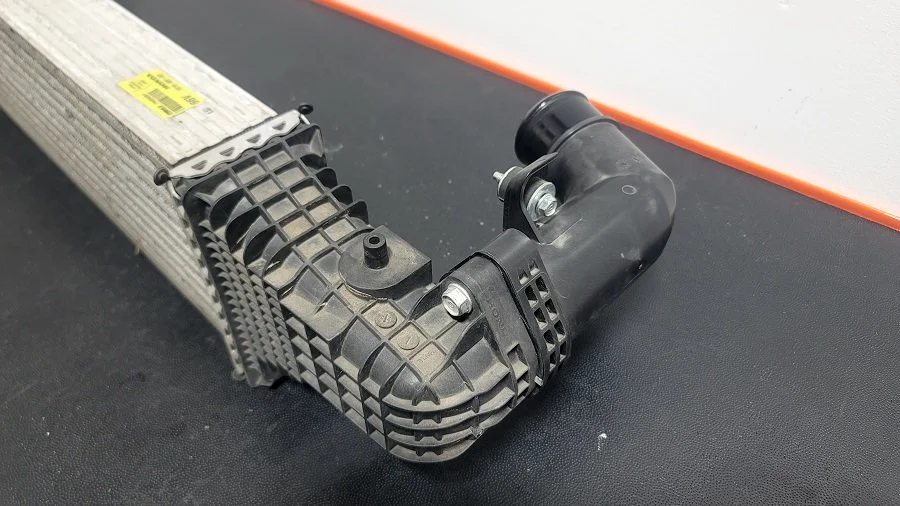
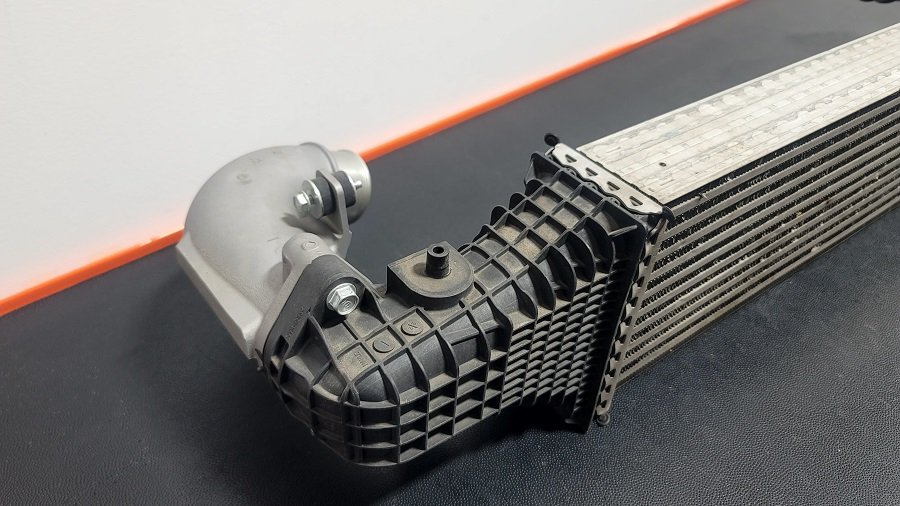
Our upgraded 27WON intercooler will focus on a few important areas and improve upon them dramatically.

Bar & Plate vs Fin & Tube
Construction
Bar & Plate: This is our go-to approach. This design is durable and resists heat soak the best. We’ve used this across every single one of our previous upgraded FMICs for other platforms and we’re going to stick with this design path for good reason for this upcoming FL5/DE5 unit.
Tube & Fin: This is another option that is gaining some popularity these days. The OEM intercooler is of this design and has some inherent shortcomings that make it a no-go for us right now. Namely, it’s pretty fragile so unless you are strictly track driving, you may want to skip this for a daily. Also, these are more costly without adding much value. Sure, they are a bit lighter but that weight savings is not worth the downsides for most people. So, why do it…
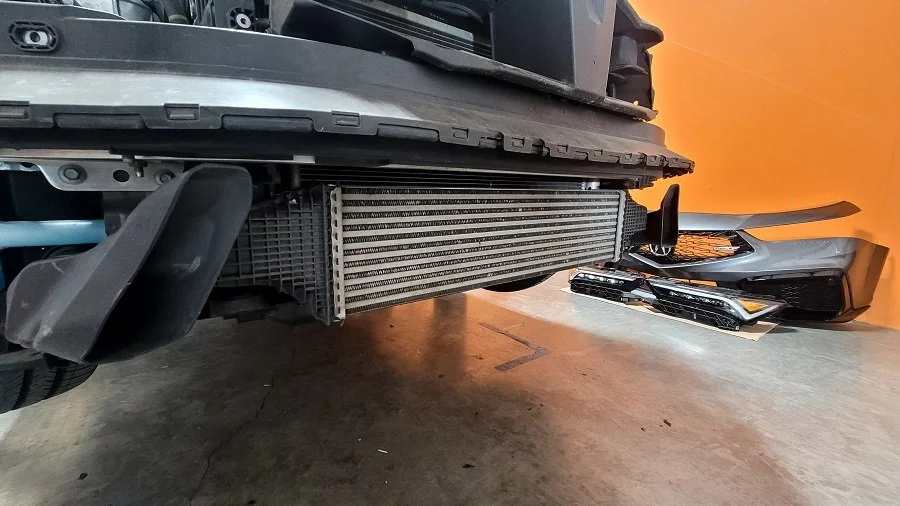
OEM FL5/DE5 Front Mount Intercooler (Behind the bumper)
Overall Size
There is ample room behind the bumper to go bigger. How much bigger? We’ll go into more of detail in a later blog about increasing dimensions in a way that makes sense. For now we'll make sure we create an intercooler core that can support power around 600HP. Going too big has downsides of its own. This won’t be a halo FMIC that is needed on the 1% of 1% of CTR. This will handle everything the Kuro+ can throw at it and a bit more.
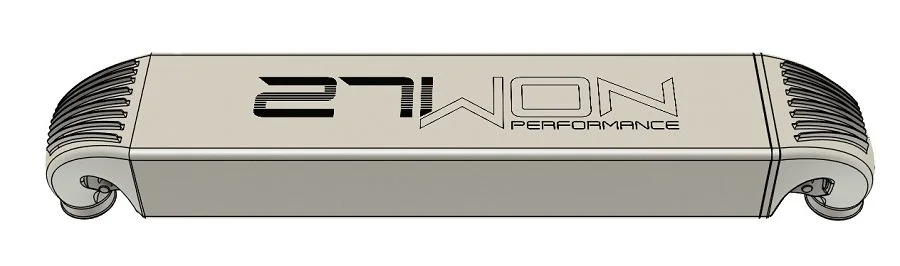
27WON FL5/DE5 Front Mount Intercooler Core Design
Airflow Improvements
This is arguably one of the most overlooked areas in the industry and one that few other companies on the market focus on. Just slap a big intercooler core to some end tanks and call it a day. This is not our motto but we see lots of our industry peers do just that day in and day out. Unfortunately, these cores can be oversized and under used at the same time! Just because the core is large doesn’t mean it’s all being used well.
We’ll introduce technology that optimizes airflow to use all of the Intercooler core, top to bottom. Then, combine that with upgraded boost tubes for a complete package. This package won’t be beat!
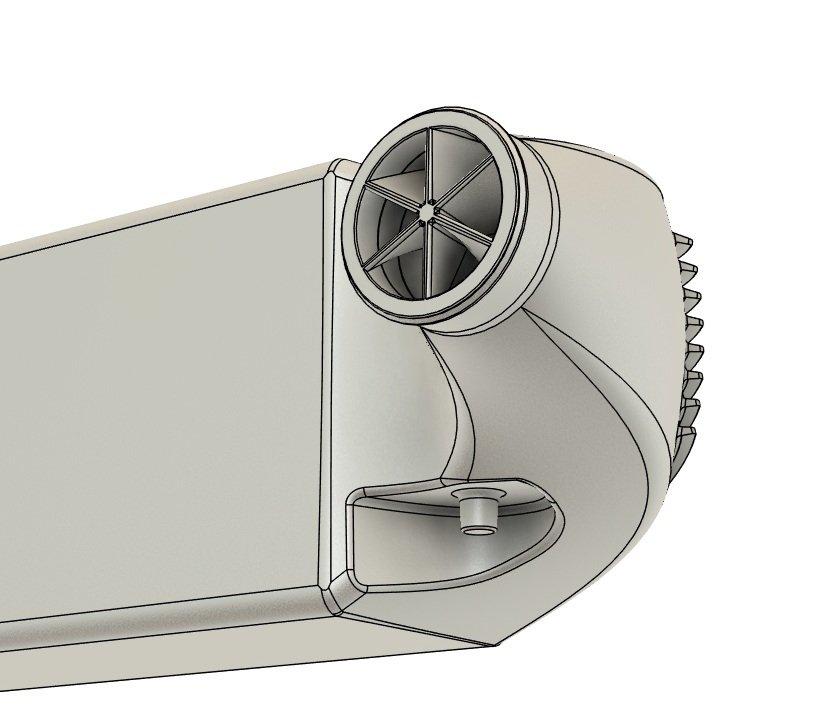
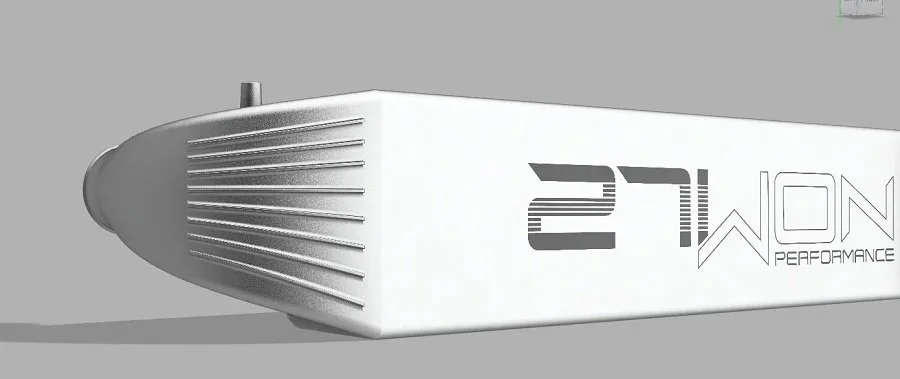
27WON FL5/DE5 Front Mount Intercooler Inlet End Tank Design
You’ll notice from this shot a couple important features. First, we’ve worked around the OE intercooler mounts so that we can maintain a longer core. Frontal area is key in intercooler design and all the other companies just narrow the core to avoid this problem. This approach would limit airflow through the core so we added a feature at the inlet and inside to shape the airflow through the core. See that fan blade?
And here are a few sneak peaks into some prototypes just to get a sense of the level of detail we’re going into you that won’t see anywhere else.
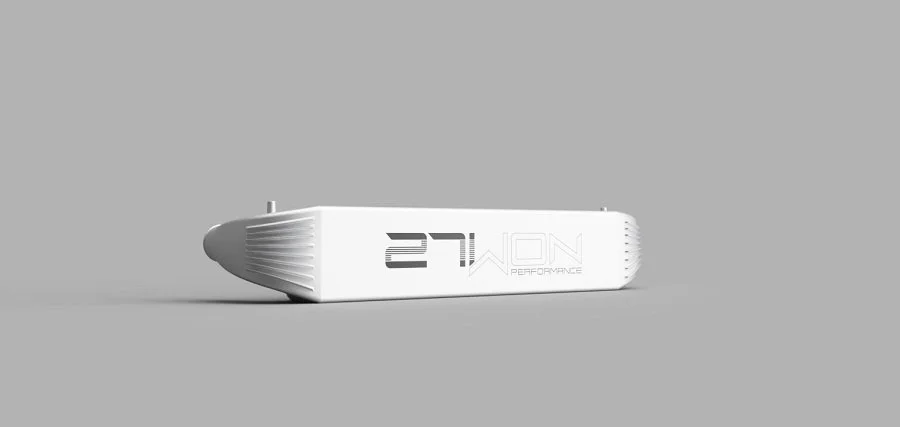
Mod on!
-Vlad